
Catch and Kill
How to Advance Disclosure Without Falling Into Deep-State Traps

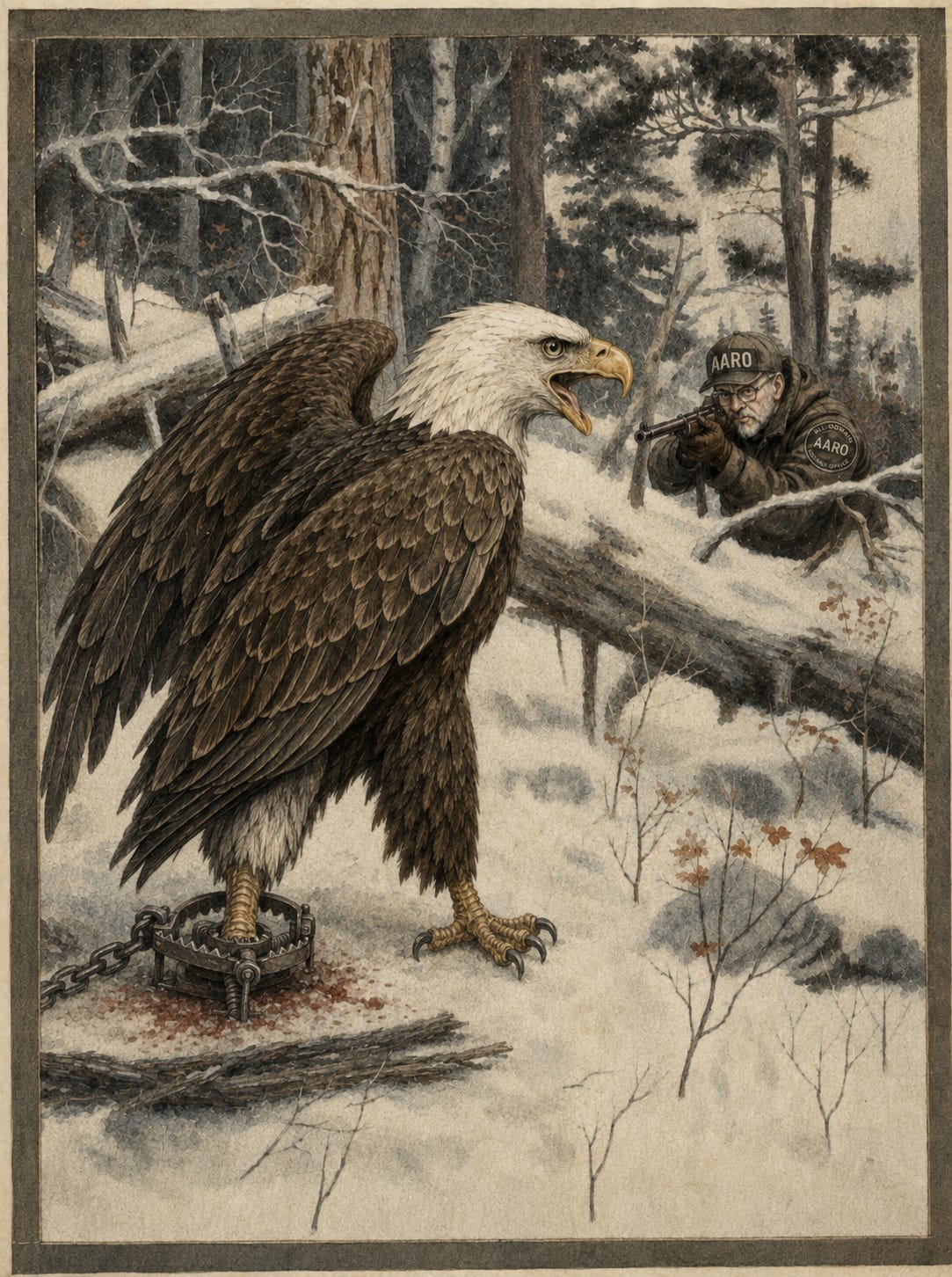
Current Events
A recent Fox News article reported that President Donald Trump has directed federal agencies to waive applicable nondisclosure agreements (NDAs) for current and former government employees and contractors who possess relevant information about unidentified anomalous phenomena.
But there is a catch: the NDAs will only be waived if the whistleblowers report through authorized government channels.
Those authorized federal channels, according to the Fox News report and subsequent posts by official government accounts, are AARO, ODNI, and PURSUE. Not the American public. Not Congress.
President Trump’s decision to release whistleblowers from existing secrecy obligations, albeit only through designated classified channels, is a modest step forward. It recognizes that knowledgeable government personnel and contractors possess information of profound national importance yet remain silent for fear of violating binding secrecy obligations.
Unfortunately, the process as publicly described is fatally flawed. Under the arrangement proposed so far, no current or prospective UAP whistleblower should entrust any of these government bodies with sensitive testimony or evidence.
The reasons are straightforward:
The designated recipients are either demonstrably untrustworthy or, in PURSUE’s case, unproven.
No meaningful whistleblower protections have been offered.
No enforceable mechanism has been proposed to ensure that the collected information reaches Congress or the public.
The first two of the three entities designated to receive UAP whistleblower disclosures have records of deception, obfuscation, noncompliance, and bad-faith treatment of whistleblowers.
The third, PURSUE, is off to a shaky start despite an initially favorable public reception.
The President — and the American people — should understand the track records of each of the institutions currently being entrusted with this historic responsibility.
AARO
Established by the Department of Defense in July 2022 pursuant to a congressional mandate, the All-domain Anomaly Resolution Office (AARO) was charged with investigating and resolving UAP reports across all domains and assessing potential threats to national security.
Since its creation, AARO has been defined by waste, abuse, and deception.
Waste: AARO’s mission of collecting, analyzing, and attempting to resolve UAP reports duplicates functions long performed by other United States Government programs. Immaculate Constellation is only one operational program performing this same mission.
Abuse: AARO has improperly used its authorities, personnel, and resources to intimidate UAP whistleblowers. The officials who founded the organization and established its culture repeatedly made disparaging and dismissive statements about UAP whistleblowers.
Deception: AARO’s former leadership misled congressional leaders, including then-Senator Marco Rubio. This allegation formed part of protected whistleblower testimony later revealed to the pubic by investigative journalists Jeremy Corbell and George Knapp.
AARO has misrepresented sensitive whistleblower testimony and created a secret advisory council of external gatekeepers to review and intercept protected UAP whistleblower disclosures.
Journalist Matthew Ford reported the existence of that council to Congress and presented evidence that a senior gatekeeper of legacy UAP programs had been appointed to advise the very office ostensibly charged with investigating those same programs.
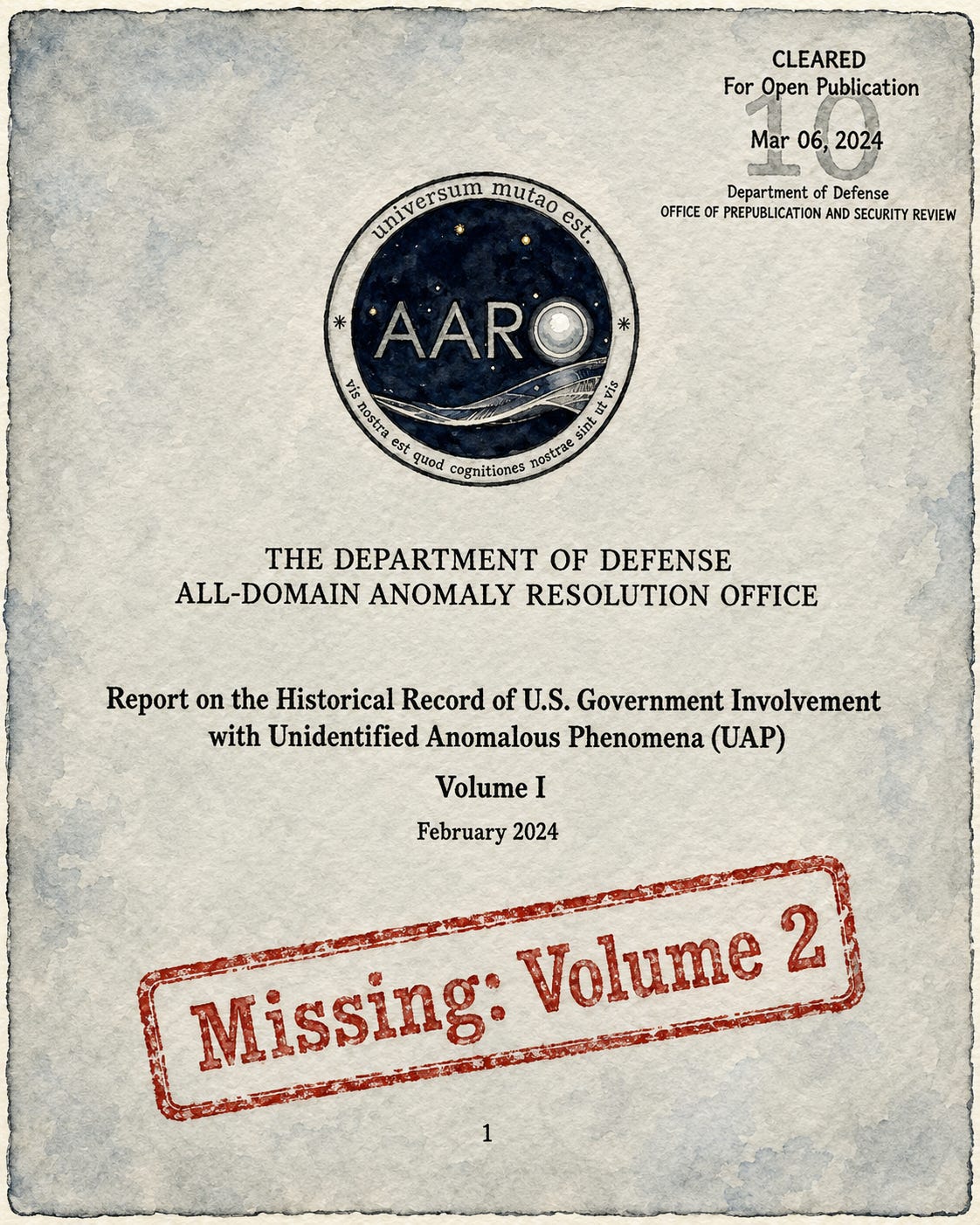
The problem is not merely that AARO has failed to resolve the UAP issue. It is that UAP whistleblowers have every reason to believe AARO will collect their information, expose their identities, mischaracterize their evidence, improperly classify their testimony, and redirect them into the very system they are attempting to expose.
Whether by accident or design, AARO functions as a catch-and-kill intelligence operation targeting Americans willing to tell the truth.
AARO’s record of misconduct means that no current or prospective UAP whistleblower can reasonably trust the organization with their testimony, privacy, or safety.
An organization that has repeatedly undermined the very witnesses whose disclosures it was created to receive should not be rewarded with a central role in President Trump’s disclosure initiative. Instead, AARO should be confined to its core data-integration mission and permanently removed from the whistleblower intake process.
ODNI
ODNI—the Office of the Director of National Intelligence—is the federal office responsible for leading and integrating the U.S. Intelligence Community and advising the President on intelligence matters related to national security. Its conduct toward UAP whistleblowers is less familiar to the American public but arguably worse than AARO’s and, in several respects, more dangerous.
Beginning in 2025, subversive intelligence officers infiltrated the Director’s Initiative Group and carried out a months-long operation to entrap, discredit, and ultimately build a case for charging UAP whistleblowers with treason and espionage.
The operation was conducted under the false pretense of a good-faith effort to “get to the bottom” of the UAP issue and bring illegally concealed programs and information under lawful oversight.
Instead, ODNI officers used intelligence tradecraft to elicit compliance, obtain evidence held by whistleblowers, fabricate derogatory information, compromise personal electronic devices, manipulate journalists, and “collapse the network” of UAP whistleblowers.
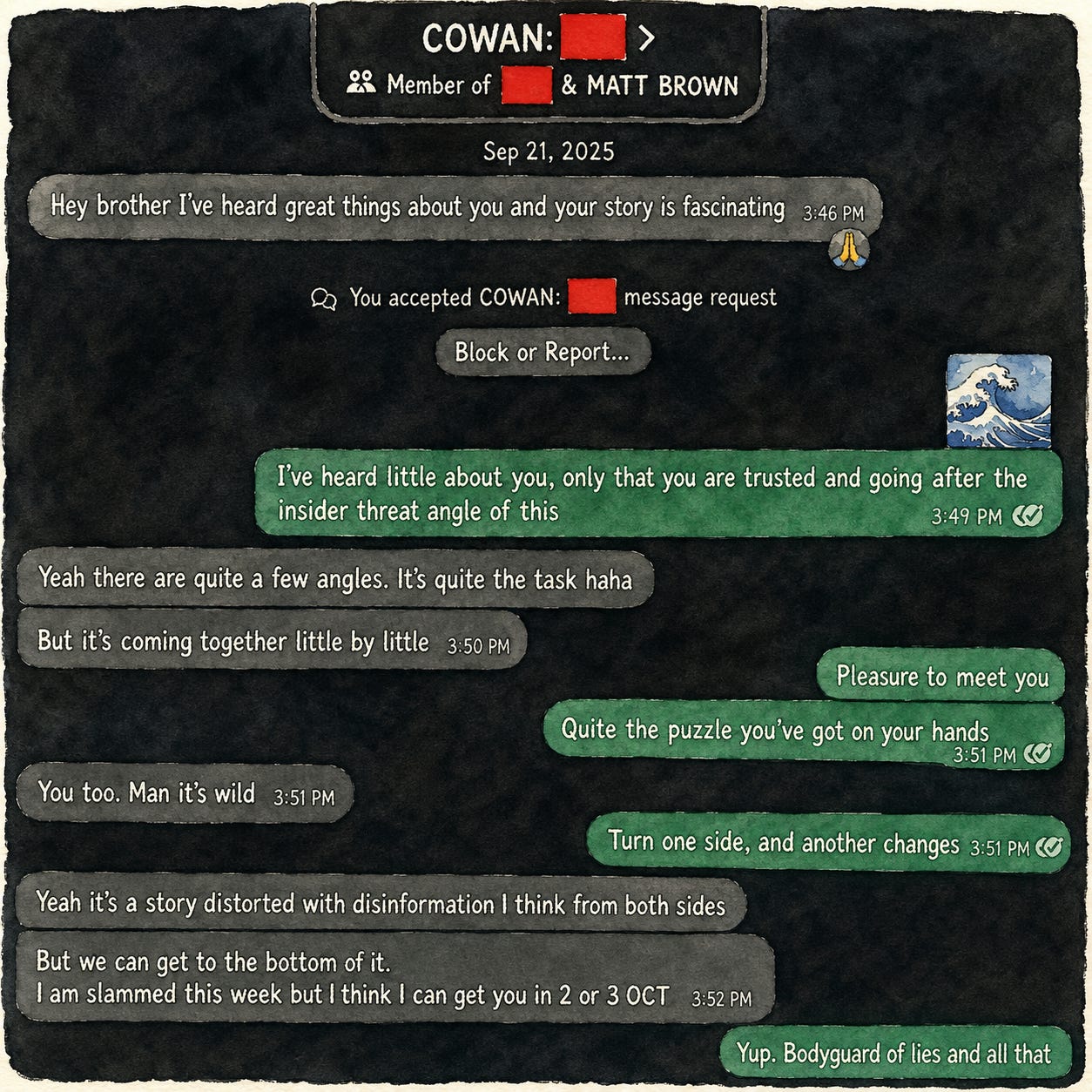
The ultimate objective of the UAP DIG team was not to protect the witnesses or deliver their evidence to Congress. It was to neutralize their influence, discredit them, threaten them with prosecution for treason and espionage, and ultimately imprison or execute them.
After the operation was exposed, the intelligence officer who directed this disgraceful effort was rewarded with a position of significant trust within the Office of the Intelligence Community Inspector General.
To this day, that individual retains access to sensitive UAP whistleblower testimony and the personal information of current UAP whistleblowers.
As a final insult, when the victims of these crimes sought justice, it was implied to them that no wrongdoing had occurred, because the perpetrators were American intelligence officers rather than foreign agents.
Let’s be clear here. Conduct that would have been treated as a hostile intelligence operation had it been committed by an adversary was excused because it was directed by American intelligence officers against American citizens.
Through its conduct and its subsequent failure to take corrective action, ODNI has thoroughly discredited and disgraced itself. No current or prospective UAP whistleblower can trust ODNI until it has redeemed itself through actions, not words.
PURSUE
PURSUE, unlike AARO and ODNI, does not yet have an established record of egregious mistreatment of UAP whistleblowers. However, the initiative is off to a shaky start.
The Department of War describes PURSUE as a government-wide effort, supported by ODNI, to identify, review, declassify, and publicly release unresolved UAP records. It has released four batches of material since May 2026 and states that additional releases will follow on a rolling basis.
Those objectives are commendable. However, the qualifier “unresolved” leaves substantial room for selective disclosure, and the initiative’s execution raises additional concerns.
First, PURSUE’s initial public release suspiciously coincided with the release of Sleeping Dog, a documentary chronicling how investigative journalist Jeremy Corbell became the “go-to” contact for UAP whistleblowers. Sleeping Dog revealed several UAP videos that the Department of War had not yet released publicly.
Those same UAP videos were subsequently released by PURSUE in a censored format. Public reporting confirmed that multiple videos sought by Congress appeared in that documentary before their official government release through PURSUE.
This sequence raises a legitimate question: was PURSUE’s initial release shaped or accelerated to preempt independent reporting?
Since then, PURSUE’s video releases have continued a pattern of concealing much more than they reveal.
Key sensor information—including airspeed, altitude, direction, range, and other contextual information—has been censored or removed. At the same time, DOW officials have chosen to release low-quality or ambiguous material from collection events that the public cannot conclusively evaluate.
This creates a fundamental contradiction: PURSUE claims to welcome private-sector analysis while withholding much of the information required for meaningful independent evaluation.
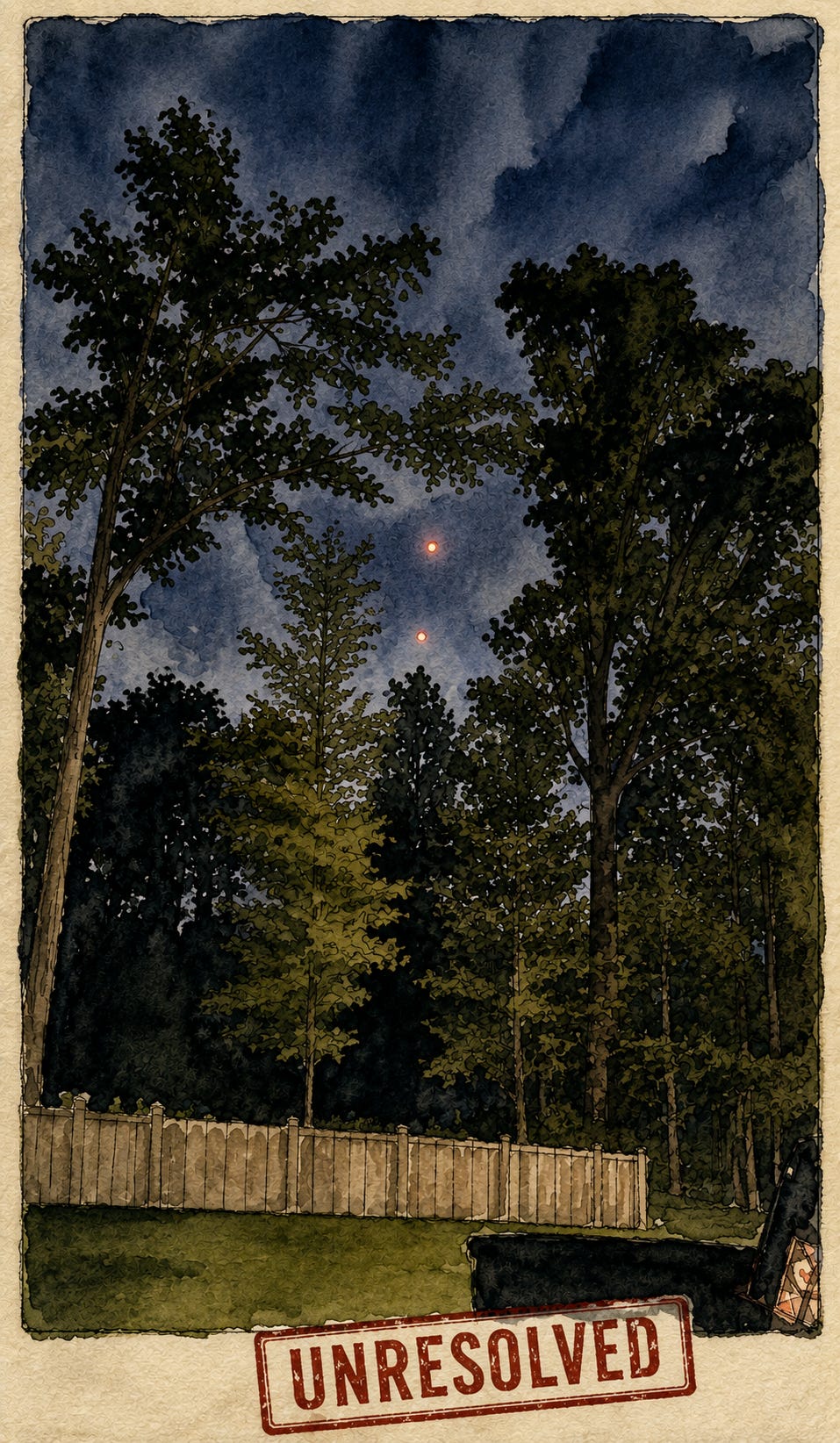
The American public cannot meaningfully evaluate a military sensor recording after the government removes the sensor data and contextual information necessary to understand what was observed. Citizen scientists cannot determine whether an object exhibited anomalous speed, acceleration, altitude, or maneuverability when the relevant data are concealed.
The effect of these “disclosures,” whether intended or not, is to further discredit the UAP subject. Presenting confusing, low-quality footage of unidentified objects as meaningful evidence trivializes the phenomenon and undermines the credibility of legitimate whistleblowers.
UAP whistleblowers are well aware that the United States Government possesses far more compelling evidence, including high-resolution, multisensor data collected over many decades. The decision to release inferior or ambiguous material while withholding stronger evidence raises serious questions about PURSUE’s strategic direction, chain of command, release criteria, and ultimate purpose.
Given these deficiencies and the Department of War’s broader conduct—notably its oversight of the discredited AARO—it is impossible at this time to recommend this pathway to current or prospective UAP whistleblowers.
However, unlike AARO and ODNI, PURSUE still has an opportunity to correct course and earn the trust of both the American people and the whistleblowers fighting to bring them the truth.
Course Corrections
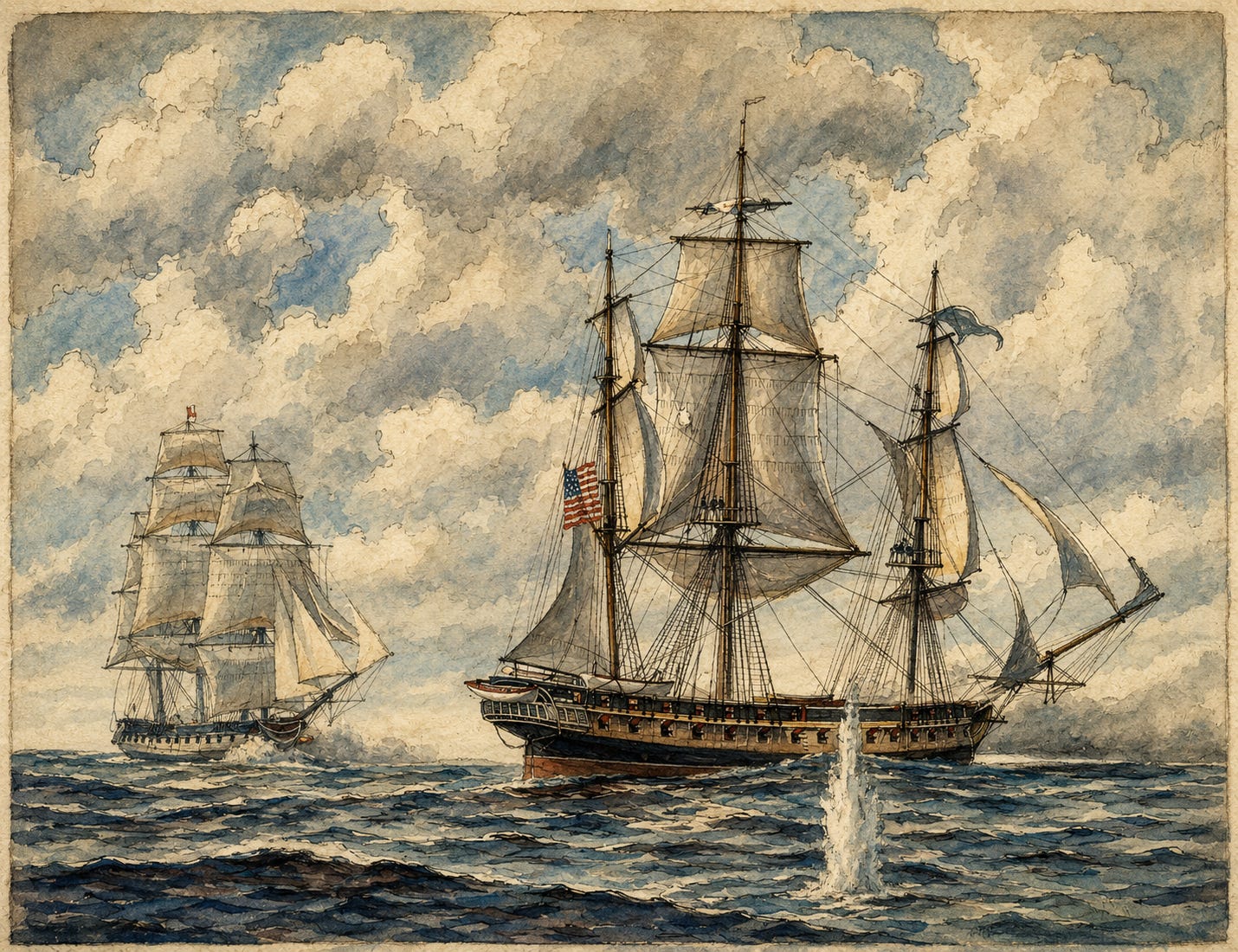
President Trump’s February 19 directive is straightforward: identify government records concerning alien or extraterrestrial life, UAPs, UFOs, and related matters, and release them to the American public.
This historic mandate for government transparency is at risk of being derailed by the known implementation plan. In addition to the three essential tools of disclosure policy—release from secrecy obligations, immunity from prosecution, and conditional amnesty for wrongdoing—seven changes to the draft presidential directive should be considered.
One. AARO and ODNI should have no leadership role in this process. Their institutional biases, records of dishonorable conduct, and refusals to correct past wrongdoing disqualify them from any position of trust within this process.
Two. This presidential directive should permit protected disclosures directly to members of Congress and authorized congressional staff, including those serving on relevant oversight committees and UAP-focused committees and task forces.
Congress cannot perform its constitutional oversight function if the Executive Branch controls its access to whistleblowers and their information.
Three. Before making a disclosure, UAP whistleblowers should receive written instructions detailing precisely which secrecy obligations are waived, which subjects may be discussed, who may receive the information, and what legal protections will apply.
Four. UAP whistleblowers should be offered meaningful protections. These should include immunity from retaliatory prosecution; protection against adverse actions affecting security clearances, employment, or personnel status; and access to independent counsel.
Additional legal, operational, and physical protections should be extended to whistleblowers and their families against threats from rogue domestic intelligence agencies, corporate security forces, foreign actors, or deniable third parties acting on behalf of any of them.
Five. Every protected disclosure and all accompanying evidence must be preserved under a documented chain of custody and immediately reported to the appropriate congressional oversight bodies.
Without these safeguards, the process risks repeating the established pattern of subversive officials receiving material testimony from whistleblowers only to bury, distort, destroy, or improperly classify it.
Six. Firm deadlines must be established for declassification review and public release. Any decision to withhold information should require a specific written justification and be subject to independent congressional review.
The President’s intent is to have this critical information released to the American public as soon as possible, not stripped of all value or delayed indefinitely.
Seven. The President should consider a bolder approach: cutting out the middlemen altogether and creating a White House task force with the authority to identify, review, declassify, and release records concerning UAP, NHI, TUO, and related matters across all elements of the Executive Branch.
This high-stakes task force should be led by politically appointed civilian officials and include fully cleared observers from Congress and the Judicial Branch.
Civilian leadership directly appointed by and accountable to the President is necessary because of an unfortunate truth: entrenched interests within the DOW, the Intelligence Community, the DOE, and other relevant departments and agencies oppose public disclosure and are working to subvert the President’s intent.
While the cooperation of these organizations is necessary to the disclosure process, their leadership is not. President Trump is widely credited with an uncanny ability to identify talent and build high-performing teams. He should leverage that skill by assembling a task force that includes observers from Congress and the Judiciary, taking the reins from the Deep State and swiftly carrying out lawful disclosure.
Without these provisions, the nascent disclosure process may amount to little more than sending whistleblowers—and the evidence they carry—back to the same recalcitrant bureaucracies that concealed the truth in the first place, while exposing those whistleblowers to the full spectrum of retaliation from parties opposed to public disclosure of the UAP reality.
Conclusion
As of publication, further details concerning this presidential directive remain unavailable to the public—and even to the very UAP whistleblowers it is intended to help.
One hopes that the final directive or executive order will be broader than current reporting suggests, more expansive in its range of authorized recipients, more discerning about whom it places in leadership, and more specific about whistleblower protections, congressional access, and the timeline for public disclosure.
UAP disclosure is an urgent and necessary undertaking for the United States Government. Whistleblowers have proven essential to that process.
As argued previously, an effective disclosure framework should include three essential tools: release from secrecy obligations, immunity from prosecution, and conditional amnesty for those whose cooperation is necessary to expose and dismantle an unconstitutional system of secrecy and suppression.
Who implements these policies is even more important than the policies themselves.
President Trump has taken a meaningful step toward breaking decades of institutional secrecy, and he should receive credit for doing what prior administrations were unwilling to do.
But implementation of this directive cannot be entrusted to the same bad-faith actors whose deception, obstruction, and retaliation made presidential intervention necessary.
Having AARO and ODNI lead this process is a recipe for disaster.
Permission to speak is not protection from retaliation.
An internal reporting channel is not independent oversight.
A promise that information may eventually be reviewed for declassification is not a guarantee of disclosure.
Most importantly, no policy is more trustworthy than the people and institutions entrusted to implement it.
The present approach should be reconsidered and corrected while there is still time.
Otherwise, the President risks having his intent narrowed, delayed, and subverted by Deep State actors who have spent decades concealing the truth from Congress, the White House, and the public.
The American people are watching, and so are the whistleblowers.
Peter Skafish recently said on That UFO Podcast, "We're in a process that is moving too quickly for my comfort and it should give people pause. Are we really ready for disclosure? It depends on what disclosure is, but if we're really ready for it then let's burrow ahead. But I would say that this is about as fast as you want to go and I wouldn't mind if it went a little slower." I don't think that people realize how little time we have. Climate change is now all around us and it is soon going to be causing profound social disruption in many ways across the whole planet. We need to understand NHI's motives as they relate to us and our planet before an outbreak of chaos that leaves us to disorganized and preoccupied to address this issue. We do not know why they are here. We need to understand this very clearly and soon.
Brilliant article, much appreciated. To be honest, the whole endeavour feels more like a honeypot operation rather than a genuine attempt at having the whistleblowers heard, and their efforts acknowledged.