
The Shadow Over Crimea
O Victory, I revere thy awful power

1 Origins & Sources
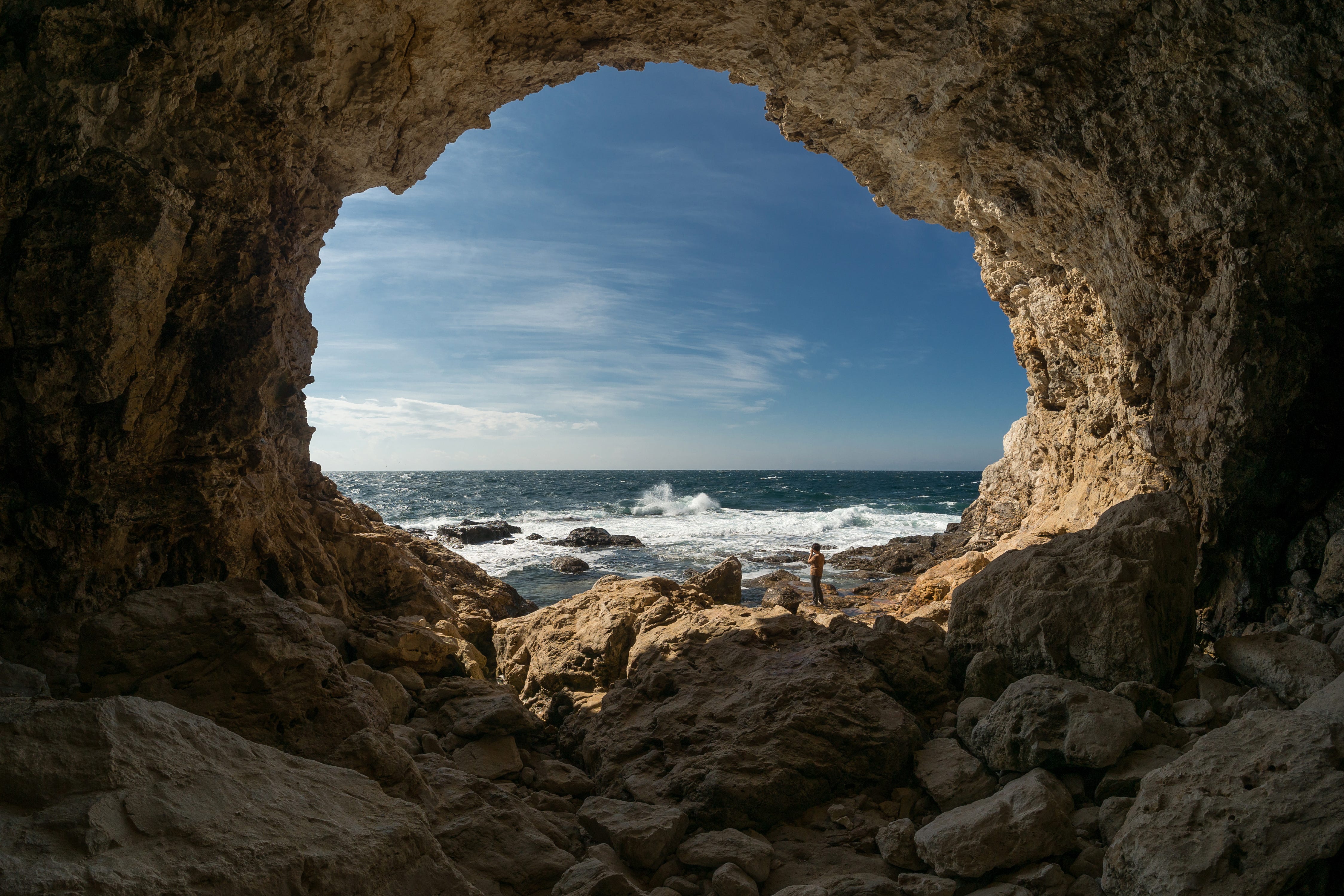
For our next stop in this circumambulation of the Black Sea, our trireme turns north. Here stretch the rugged shores of Crimea – tawny stone cliffs and rocky beaches that recall the best of the Greek isles. Farther west, the marshy deltas and long sandy reaches of Ukraine hint at the vastness of the Eurasian steppes. Behind this deceptively hospitable coast lurks the mysterious Sea of Azov: a shallow, boiling cauldron and secret heart of the Mediterranean-basin. On its best days the Crimean coast is warm and radiant, drawing out natives and travelers alike to sun-drenched beaches; yet the winters can be as bitter and snow-lashed as those of Odessa, a favored home to poets and merchants.
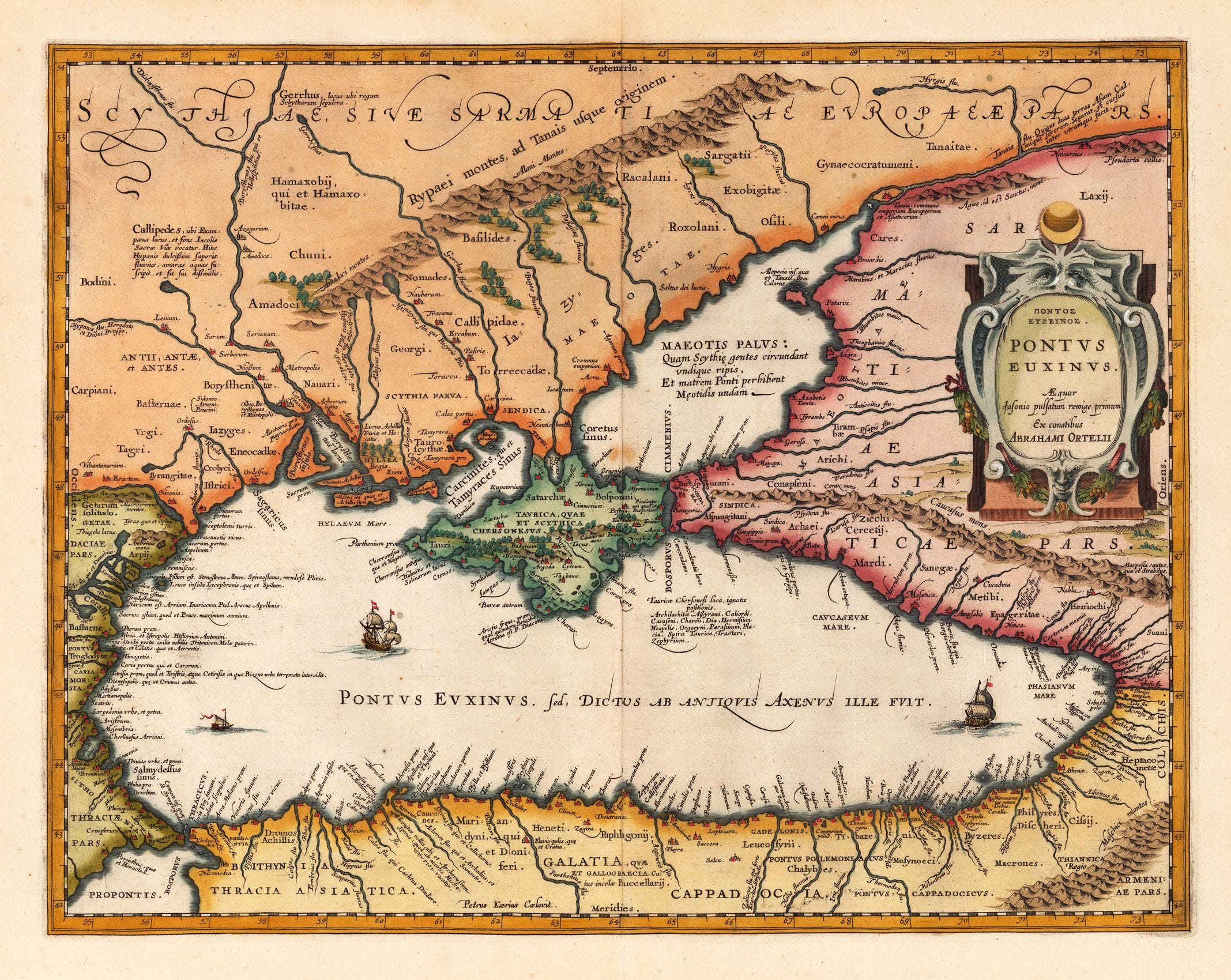
Into these waters flows the mighty Dnieper River. From its upper reaches near Smolensk to its estuary at Kherson, the Dnieper linked the Baltic and Pontic riverine systems, enabling the transmission of goods, technologies, and memories between the civilizations of the Near East, the Aegean, and the steppe. Along this northern coast of the Black Sea once dwelled a mosaic of peoples, flowing and ebbing with the cyclical tide of human emigrations from the Central Eurasian steppes: Cimmerians, Tauri, Scythians, Greeks, Goths, and the ancestors of the Slavs – all come and gone.1 Although few indigenous records survive, the accounts of Greek colonists, Persian administrators, and later Byzantine and Arab geographers provide valuable external testimony to its complex cultural ecology.2
In this knot-work of tales, several narrative cycles stand out for those on the hunt for potential memories of non-human contact: the Greek drama Iphigenia in Tauris, the scattered legends of the Scythian Sky-Riders, and the enduring Myth of the Serpent Bride whose surprising transmission we find in the French medieval tale – Mélusine. Together they illustrate how Greek, Scythian, and Slavic cultures perceived interactions between the human world and the unfamiliar forces that shaped the northern Black Sea.
2 Set & Setting
Along the northern shores of the Black Sea, the peoples dwelling in what is now southern Ukraine formed a shifting frontier where Greek colonists, Scythian nomads, Sarmatian explorers, and later Slavic peoples met and exchanged goods, gods – and blood. The region’s mythic memories – drawn from local tragedies, silk-road lore, and oral legends – reflect a comely entanglement of traditions and peoples. Though few local written records survive, the region’s ancient character is preserved through the accounts of Greek and Persian observers and, in later centuries, in the songs and chronicles of the Cossacks and the Russians.[3]
By the Classical period, the northern littoral of the Black Sea had become a world of intermediaries – Greek colonies like Panticapaeum thrived alongside the fortresses of Scythian and Sarmatian warlords. Persian envoys, Greek merchants, and nomadic horsemen met here at the frontiers of empire, trading not only gold and grain but rituals, metaphors, and cosmologies. The coasts remain spotted with shrines that blended Hellenic and local forms of worship: altars to Artemis and Apollo stood beside sacred groves dedicated to river gods, wind spirits, and subterranean powers. This is a land where just beneath the surface traces of contact with strange Others linger still.
Amid this shifting frontier, myth became both map and memory to a region ever beset by external powers. In these tales we find proof that, while empires rise and fall, it is the People who remain and remember. From this grey frontier come our next three tales, each offering a different window into how the peoples of the Black Sea understood the powers, celestial, maritime, and subterranean – that shaped their world.
3 Survey
The first of these, Euripides’ Iphigenia in Tauris, recounts the ordeal of a Greek heroine abducted to a foreign land.3 Saved from her own sacrifice at Aulis by the divine intervention of Artemis, Iphigenia finds herself bound to a cruel irony: her life is spared only to serve as priestess in a barbaric cult that demands the sacrifice of humans in exchange for abundance and protection. Thus, among the Tauri of Crimea, Iphigenia is sworn to participate in the capture and sacrifice of all foreigners in honor of their goddess – trapped to preside over an unending cycle of ritual murder. When her brother Orestes secretly arrives, driven by Apollo’s oracle to seize the Tauri’s idol of Artemis, the drama turns from tragedy into a rescue mission. By the end of our story, our heroes have seen human blood spilt and mixed with purified water for divine consumption, and deceived the kingly head of the cult into freeing captured foreigners destined for slaughter. In Iphigenia in Tauris, Euripides depicts the Taurians as a fierce maritime people devoted to a mysterious power that demands human - offering a rare and unsettling glimpse into the ritual economy of an indigenous people unnaturally empowered through systematic human sacrifice.
Our second collection are the intriguing, fragmentary accounts of the Armaspians. Preserved first in the written word within Herodotus’, Histories, these legends tell of one-eyed shamans locked in perpetual conflict with the griffins who guard the gold of the Hyperborean North.4 Behind this Greek retelling lies an older stratum of steppe mythology: epics of sky-borne horsemen battling solar guardians at the edge of the known world.5 Their pursuit of the sun’s treasure and their ambiguous status between mortal and divine echo the Tengrist traditions and the more obscure sky myths of the inner Eurasian heartlands.
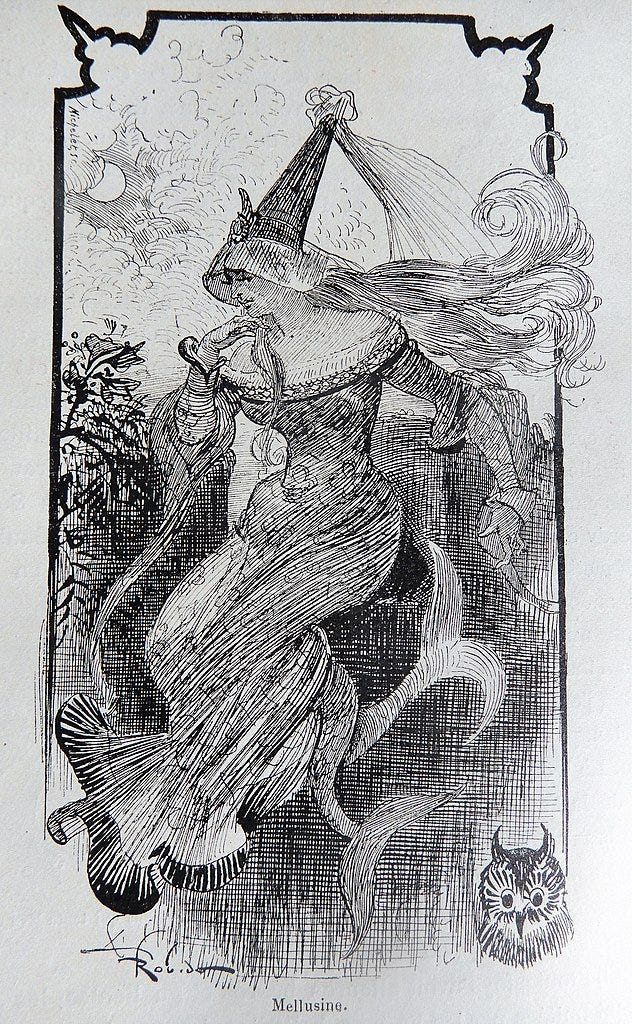
The final story, that of the Serpent Bride of the Steppe, joins these traditions as an ephemeral echo occasionally captured by written histories before making a startling reappearance in medieval France. Across Ukrainian, Cossack, and even Persian folktales, we encounter the recurring tale of a mortal man who weds a woman secretly serpent below the waist – a hidden guardian of subterranean waters. Known chiefly through oral tradition, with scattered allusions in Byzantine and Persian chronicles, the Serpent Bride tells a story of attempted human and non-human procreation through deception, undertaken for the survival of a mysterious underground race.6 From these steppe roots, the legend makes a sudden migration westward, emerging in Medieval France in the form of Jean d’Arras’s Le Roman de Mélusine. In this sanitized, courtly romance, the cursed half-woman/half-serpent becomes the Matriarch of the real historical House of Lusignan.7 The journey from steppe legend to genealogical propaganda for la noblesse française reveals an enduring fascination with unions between human and non-human beings, the inevitable exposure of deception, and the peril – and promise – of new life.
4 Indicators & Signatures
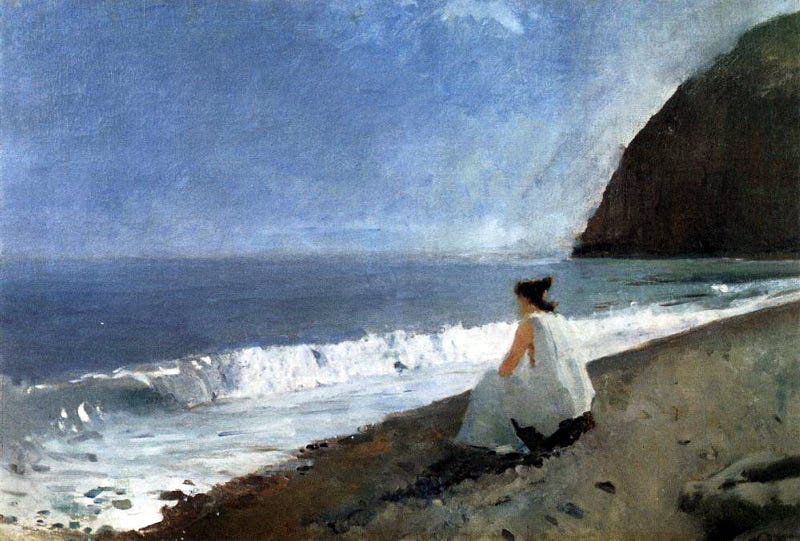
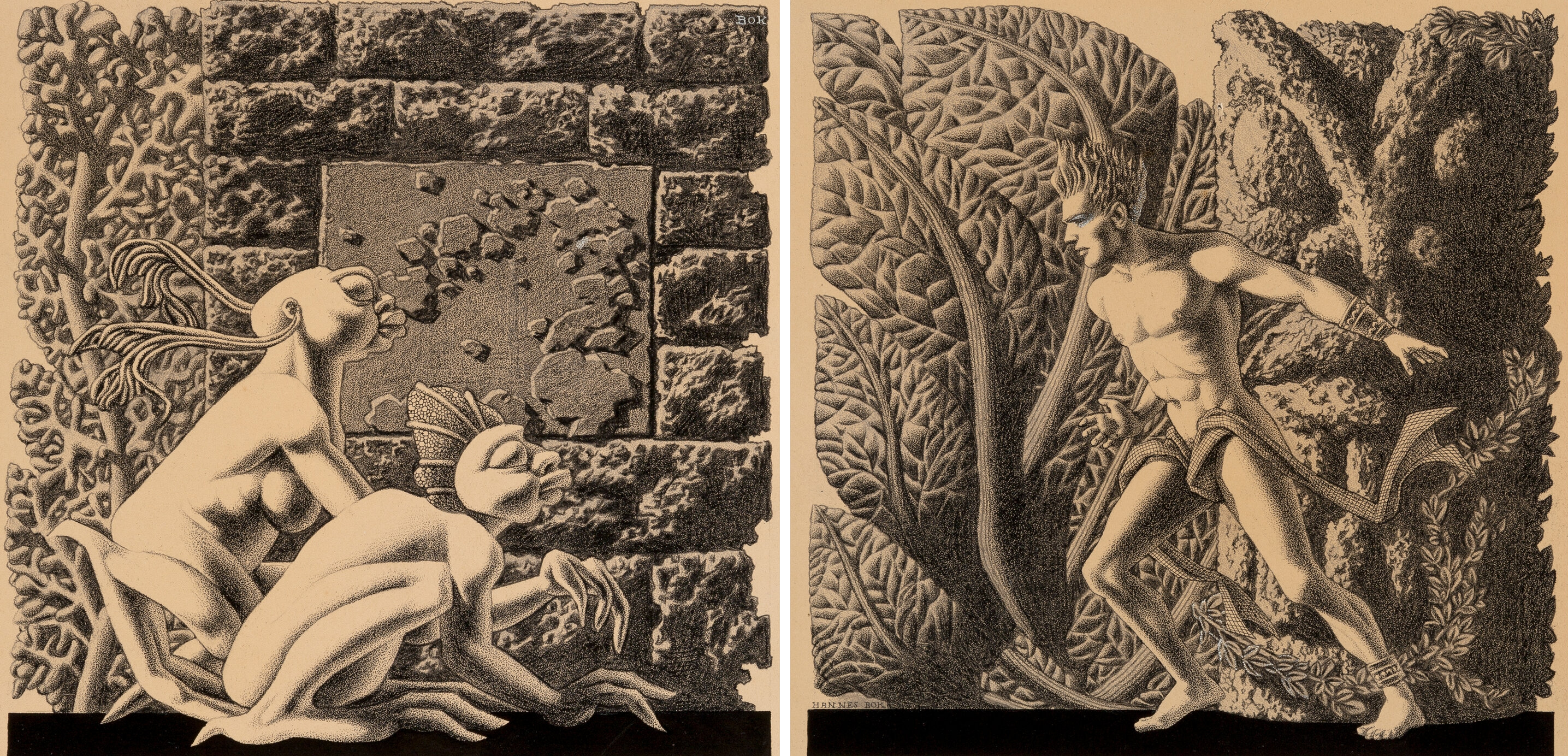
This treatment will explore just one of these tales in depth: Iphigenia in Tauris. Long after kings sign their treaties and generals receive their honors, it is the people who must endure the lingering costs of those “splendid little wars.” So too here, in the aftermath of Troy’s ruin, our heroes drift – lost and broken – into the lands of the Tauri. The myth stands as one of the earliest Greek ethnographies of the Crimean peninsula, describing not merely an encounter between nations but between worlds. Though framed as drama, Euripides’ account preserves a strikingly coherent portrait of the Taurian cult of Artemis: a maritime faith devoted to an idol of the goddess said to have fallen from the sky.
Thy [Apollo’s] voice commanded me to speed my course
To this wild coast of Tauris, where a shrine
Thy sister hath, Diana; thence to take
The statue of the goddess, which from heaven
(So say the natives) to this temple fell:
This image, or by fraud or fortune won,
The dangerous toil achieved, to place the prize
In the Athenian land: no more was said;
But that, performing this, I should obtain
Rest from my toils.
Within the play, Iphigenia’s transformation from sacrificial victim to sacrificing priestess renders her a reluctant living conduit between human and divine. The ritual she performs – mixing human blood with lustral water to be sprinkled on the altar – can be read as a symbolic act of data collection and transmission. The purified water receives the genetic material of a human being, and the resulting mixture is presented to the Others through sublimation via fire or water. What the Taurians performed as purification might equally be seen as data transmission – human blood encoding pattern into water, an ancient wet-interface for communion with the Other. Millennia later, science might name such phenomena “smart” water and “biotechnological” data storage.89
But on this barbarous shore
The unhappy stranger’s fate I moan,
The ruthless altar stain’d with gore,
His deep and dying groan;
And, for each tear that weeps his woes,
From me a tear of pity flows.
The Tauri’s obligation to sacrifice every foreigner who enters their land is striking in its irrational brutality and public acceptance. This bloody edicts arguably acts as a protocol of containment – a means to regulate the incursion of outside influences into a protected ecosystem. The goddess’s demand for blood thus functions as a contractual safeguard, a kind of metaphysical non-disclosure agreement binding her worshipers to secrecy and control.
[Here]… a barbaric king
Holds his rude sway, named Thoas, whose swift foot
Equals the rapid wing: me he appoints
The priestess of this temple, where such rites
Are pleasing to Diana, that the name
Alone claims honour; for I sacrifice
(Such, ere I came, the custom of the state)
Whatever Grecian to this savage shore
Is driven: the previous rites are mine; the deed
Of blood, too horrid to be told, devolves
On others in the temple: but the rest,
In reverence to the goddess, I forbear.
Additionally, the edict, which provides a constant supply of human minds, bodies, and souls to satiate a talking idol in exchange for safety from famine and invasion, invites chilling modern comparisons. It is easy to see striking parallels between the cult of Artemis Tauropolos and the esoteric order of Dagon’s rule over the hybridized population of Innsmouth. To violate the deal – by refusing blood sacrifice, or by attempting to leave – invites collapse of the entire system. In this light, the intrusion of Iphigenia’s brother, Orestes, is not simply a heroic rescue, but a “divinely” ordered theft of an anomalous technology at the behest of a rival non-human power, in this case, Apollo.
The image of Artemis Tauropolos is a curiosity even among divine relics. Reported to have fallen from the sky, it not only demands human blood but also exhibits signs of animation and sentience that set it apart from ordinary cult idols. Early on, Euripedes shows that the idol is conscious of the events unfolding before it – not merely symbolize the goddess, but manifesting her will.
When we touched the image of the goddess,
it shuddered in its place and turned its eyes;
and all the temple shook,
as if the goddess herself were there and shared our counsel.
At other times, the idol is shown to render aid to humans when their goals overlap, in one case seemingly answering the invocations of our escaping heroes by changing the weather to hasten their escape.
They bore the image down to the shore;
and placing it within the Grecian bark,
they loosed the cable from the rock;
and a favoring breeze sprang up,
and the vessel sped lightly o’er the sea.
Finally, the image of Artemis is witness to, and perhaps source of, a floating apparition of the goddess Minerva, whose loud voice and frightening appearance causes the pursuing Tauri cult and their king to give up the chase. Without this divine intervention – which also helps our Greek heroes overcome the curse of Poseidon upon the victors of the battle of troy – Orestes, Iphigenia, and the rescued humans would have been recaptured to have their throats promptly slit and bodies impaled in front of the sea-cliff temple to Artemis.
Whither, O royal Thoas, dost thou lead
This vengeful chase? Attend: Minerva speaks.
Cease thy pursuit, and stop this rushing flood
Of arms; for hither, by the fateful voice
Of Phoebus, came Orestes, warn’d to fly
The anger of the Furies, to convey
His sister to her native Argos back,
And to my land the sacred image bear.
Thoas, I speak to thee: him, whom thy rage
Would kill, Orestes, on the wild waves seized,
Neptune, to do me grace, already wafts
On the smooth sea, the swelling surges calm’d.
It is intriguing to note that it is Minerva who appears, and not Artemis. The goddess of wisdom, she is the solar inversion of the lunar Diana who embodies the feminine aspects of the Wilds. Both achieve purity, albeit through different means – Artemis choosing isolation, and Minerva through intellect. The link is subtly demonstrated by Minerva’s own demands as condition for safe passage: the idol must be brought to Athens and satiated annually with blood lightly drawn from the neck of a priest – albeit non-fatally. Thus, divine reason puts limit to irrational appetite, and a compromise with the eternal blood-lust of Artemis Tauropolos is achieved.
5 Interpretations
In this strange goddess of the Taurians we glimpse the ancestral outline of a darker lineage – one that would reemerge in France as Mélusine, and later still along the fog-bound shores of New England. The cult of Artemis Tauropolos, nourished by blood and bound to a sentient idol fallen from the sky, prefigures the maritime covenants imagined millennia later by H. P. Lovecraft in The Shadow Over Innsmouth and The Call of Cthulhu. In these tales the sea is again both womb and grave, ruled by secret races who demand human sacrifice and intermarriage in exchange for protection, wealth, and “forbidden” knowledge. Where Euripides gives us a goddess fallen from heaven, Lovecraft gives us a god rising from the abyss, and each tale is one of the process of inversion – lunar and solar, above and below.
The image of Artemis Tauropolos stolen by Orestes shudders and speaks in the minds of its worshippers; the black idol of Cthulhu seized by Inspector Legrasse murmurs in dreams and summons its cult across continents. Both are vessels for intelligences neither holy nor human, transmitting commands invisibly through the aether. Neither are made by human hands – they arrive complete, autonomous, and on a mission. The Greeks called such objects diopetēs, “fallen from Zeus,” and in this sense the Artemis idol anticipates Lovecraft’s alien radio-idols – receivers for minds that no longer confined to biology.
Both cults flourish at the frontiers of human civilization – in liminal towns, and strange islands. There, the mingling of blood sustains uneasy agreements between humans and the Others. The Taurian rite reveals the shape of an ancient contract: blood for safety, secrecy for survival. The same terms bind the worshipers of Dagon and the hybrid families of Innsmouth. Each generation renews the pact in ignorance, mistaking fear for faith and safety for freedom. These bargains, crafted in secrecy and sealed in blood, preserve the illusion of order while ensuring the exploitation of the weaker race.
But the universe abhors stasis, and change is inevitable. Into the “closed system” of Tauris step divine disruptors; first Apollo, then Minerva — allies to humanity, if not friends. Their intervention breaks the cycle of suffering and sacrifice, just as Robert Olmstead’s report to the authorities brings the cleansing of Innsmouth and the dissolution of its parasitic covenant. To follow Iphigenia’s flight from Tauris into the open sea is to witness the first escape from Innsmouth, the primal rehearsal of every later tale in which humankind dares to sever its forgotten pact with powers too old to name. Yet the shameful warning remains: again and again, humanity surrenders its freedom for the false security of belonging to an alien hierarchy of being.
Sjöberg, Andreas. Cultural Interactions in the Northern Black Sea: A Study of Burial Records and Its Interpretation of Hybridisation. Master’s thesis, Department of Archaeology and Ancient History, Uppsala University, Spring Term 2022. https://www.diva-portal.org/smash/get/diva2:1676291/FULLTEXT01.pdf
Tsetskhladze, Gocha R. The Greek Colonisation of the Black Sea Area: Historical Interpretation of Archaeology. Franz Steiner Verlag, 1998.
Euripides. Iphigenia in Tauris. Translated by Robert Potter, The Internet Classics Archive, Massachusetts Institute of Technology, 1994, https://classics.mit.edu/Euripides/iph_taur.html
Herodotus. The Histories, Book IV. Translated by A. D. Godley, Harvard University Press, 1920. Perseus Digital Library, Tufts University, https://www.perseus.tufts.edu/hopper/text?doc=Hdt.+4.13
Aeschylus. Prometheus Bound. Translated by Ian Johnston, Vancouver Island University, 2012, Richer Resources Publications, Arlington VA. Web version:johnstoniatexts.x10host.com/aeschylus/prometheusboundhtml.html
Shedden-Ralston, William Ralston (trans.). Russian Folk-Tales: Translated from the Russian with Notes. London: W. S. Lo & Co., 1868. https://www.gutenberg.org/files/62509/62509-h/62509-h.htm
d’Arras, Jean. Mélusine ou la Noble Histoire de Lusignan. c. 1393. https://www.gutenberg.org/cache/epub/65457/pg65457-images.html
Hankey, A. (2019). A means for liquid water to retain information (Water Memory). Journal of Physics: Conference Series, 1251(1), 012018. https://doi.org/10.1088/1742-6596/1251/1/012018
Heinis, T., Sokolovskii, R., & Alnasir, J.J. (2024). Survey of Information Encoding Techniques for DNA. ACM Computing Surveys, 56 (4), 1-30. https://doi.org/10.1145/3626233
For our struggle is not against flesh and blood, but against the rulers, against the authorities, against the powers of this dark world and against the spiritual forces of evil in the heavenly realms. — Ephesians 6:12
~50AD
There's a history of worshipping the creations and not the creator.